
Best Shower Grab Bars for Seniors
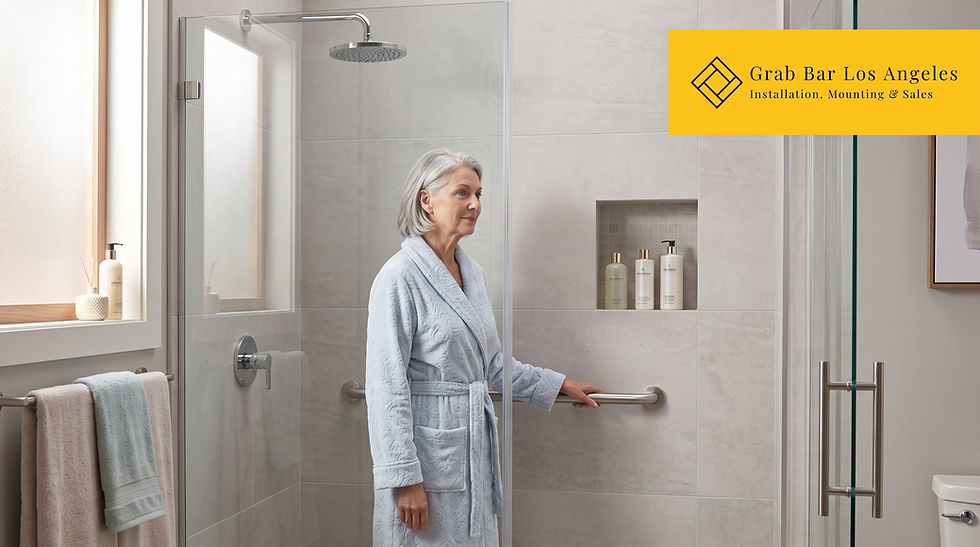
Not every grab bar sold online is actually a good fit for an aging body. Some are too thin to grip with arthritic hands. Some rely on suction cups that fail exactly when weight is put on them. Some are mounted — by well-meaning family members — into drywall that was never built to hold someone's full body weight. Choosing the right shower grab bar for seniors means looking past the product photo and paying attention to a few specifics: grip, height, material, and how it's actually anchored to the wall.
This guide walks through what to look for, what to avoid, and how ADA guidelines can serve as a helpful reference point even for a standard home shower that isn't legally required to meet them.
Why Shower Grab Bars Matter More for Seniors
Balance, grip strength, and reaction time naturally change with age, and showers combine several fall risk factors at once: a wet, soapy surface, a step over a tub wall or threshold, and very little else nearby to hold onto if something goes wrong. According to the CDC, falls are the leading cause of injury among adults 65 and older, and the bathroom remains one of the most common places those falls happen.
A well-chosen, properly mounted shower grab bar directly addresses that risk in one of the few rooms in the house where there's often no furniture, railing, or wall corner to catch a fall.
What Makes a Grab Bar Actually Safe (Not Just Marketed as One)
A surprising number of "grab bars" sold for home use aren't built to the same standard as accessible bathroom grab bars used in commercial or ADA-compliant installations. A few things separate a genuinely safe bar from one that just looks the part:
Load rating: A safe grab bar, along with its mounting hardware and the wall behind it, should be able to withstand at least 250 pounds of force — the benchmark used in ADA compliant shower grab bars installations.
Permanent mounting: Suction-cup bars are marketed as a no-drill convenience, but they can release unexpectedly, especially as suction weakens over time or on textured tile. A permanently mounted bar anchored into blocking or studs is the safer choice for daily reliance.
Grip diameter: A bar between 1.25 and 2 inches in diameter is generally easiest to grip securely, including for hands with reduced dexterity or arthritis.
Slip-resistant surface: A textured or knurled finish makes a meaningful difference in a wet shower, where hands are rarely fully dry.
Choosing the Right Bar Shape
Straight Bars
A straight horizontal bar mounted along a shower wall gives a consistent handhold at one height — a solid, affordable choice when the user's height and mobility needs are fairly stable.
Angled (Diagonal) Bars
An angled bar spans multiple heights on a single bar, which is useful for the up-and-down motion of stepping over a tub wall or moving from standing to seated on a shower bench. This versatility is part of why angled bars are often recommended for households where more than one person, at different heights, will use the same shower.
Vertical Bars
A vertical bar near the shower entry supports the pulling motion of stepping in or out, complementing a horizontal or angled bar elsewhere on the wall.
For a closer look at how these shapes compare against ADA specifications, our roundup of top ADA-compliant grab bars for safe and accessible spaces breaks down specific options by length and material.
Material and Finish: What Holds Up in a Shower
Stainless steel remains the most reliable material for shower grab bars, since it resists corrosion under constant moisture exposure. Within that category, a few finish options matter:
Textured or knurled stainless steel: The best grip option for wet conditions, though slightly more visually "clinical" than a smooth finish.
Brushed or matte stainless steel: A softer, more residential look that still provides reasonable grip.
Powder-coated finishes: Available in a range of colors to blend into bathroom decor, though it's worth confirming the coating doesn't compromise the bar's slip resistance.
Accessible bathroom grab bars have come a long way from the clinical, institutional look many people associate with them — modern options are designed to look like a natural part of the bathroom rather than medical equipment bolted onto the wall.
Mounting Height for Seniors
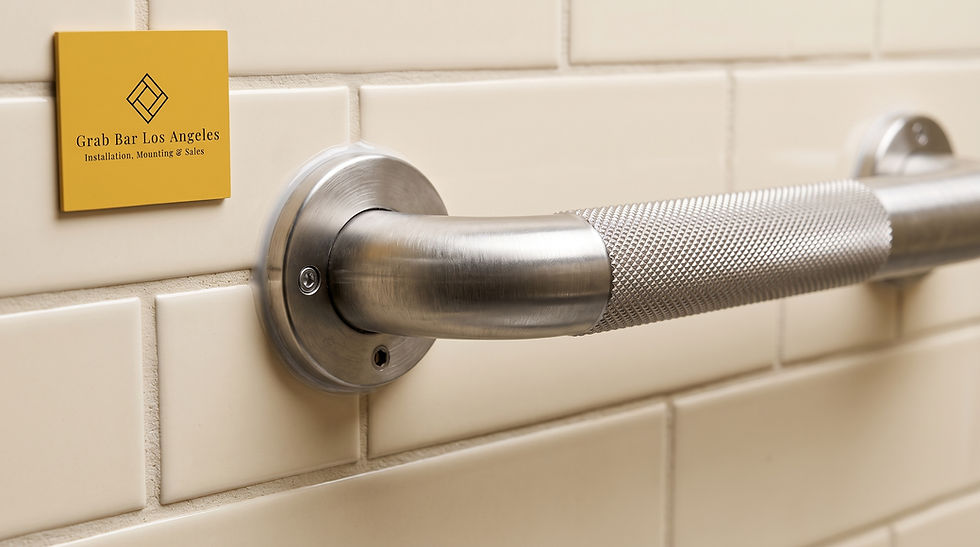
ADA guidelines call for grab bars to be mounted 33 to 36 inches above the finished floor, and this range works well as a starting point for most adult users. That said, mounting height should ultimately reflect the specific person using the shower — someone shorter or using a shower seat may benefit from a slightly lower placement, while a taller user might prefer the upper end of that range.
This is one of the reasons a generic online purchase and a DIY install can fall short: the bar itself might meet spec, but if it's mounted at a height that doesn't match how the person actually moves through the shower, it won't function the way it should.
Not sure what height and placement fit your bathroom? Our team evaluates the specific person and space before recommending bar placement — not a one-size-fits-all template. Talk to our grab bar installer team or call 818-939-9615.
Mounting: Why Installation Is Where Most DIY Grab Bars Fail
Even a high-quality, properly rated bar is only as safe as its installation. Mounting grab bar to tile is one of the more technically demanding parts of the job — tile can crack under standard drill pressure, and the structural blocking behind it isn't always where it looks like it should be.
Installing ADA grab bars correctly generally involves:
Locating studs or blocking behind tile, fiberglass, or drywall
Using anchors rated for the specific wall material, not generic hardware-store anchors
Confirming the bar holds its rated load once mounted, not just that it looks secure
This is why we generally recommend professional installation for shower grab bars, even though a single straight bar over an easily located stud can sometimes be a reasonable DIY project. If you're setting up more than one room, our step-by-step guide to making your home ADA-compliant with grab bars covers a full room-by-room approach.
What About ADA-Compliant Bathtub Grab Bars?
If your bathroom has a tub-shower combo rather than a standalone shower stall, it's worth knowing that ADA compliant bathtub grab bars follow a somewhat different placement logic — positioned relative to the tub's rim height and head/foot end walls, rather than the shower-compartment rules used for a stall shower. A tub-shower combo may need bars that reference both standards depending on how the space is used.
Cost and Assistance Programs

Grab bar cost varies based on the number of bars, wall material, and whether structural blocking needs to be added. For seniors on a fixed income, it's worth knowing that free grab bar installation for seniors programs exist in some areas through county aging agencies, HUD-funded home modification grants, and local nonprofit organizations — worth checking into before assuming a full out-of-pocket installation is the only option.
If you're new to ADA-related grab bar specifications generally, our beginner's guide to ADA-compliant grab bars is a useful primer before shopping.
Frequently Asked Questions
1. What is the best type of shower grab bar for seniors?
A permanently mounted stainless steel bar with a textured grip, sized between 1.25 and 2 inches in diameter, is generally the safest choice. Whether a straight, angled, or vertical shape works best depends on the specific movement being supported — stepping in, standing, or transferring to a seat.
2. Are suction cup grab bars safe for seniors?
Suction cup bars are not recommended for regular, weight-bearing use. Suction can weaken over time, especially on textured tile, and the bar can release unexpectedly under load. A permanently mounted bar anchored into structural blocking is a safer long-term choice.
3. What height should a shower grab bar be mounted for seniors?
33 to 36 inches above the finished floor is the standard ADA reference range and works for most adult users, though the ideal height should ultimately be adjusted to the specific person's height and mobility needs.
4. Can a shower grab bar be installed on tile without cracking it?
Yes, with the right approach. Mounting a grab bar to tile typically requires a masonry drill bit, careful layout to avoid grout lines where possible, and anchors rated for tile and the structure behind it. Professional installation reduces the risk of cracked tile or a bar that isn't properly secured.
5. How much weight should a senior's shower grab bar support?
A properly rated grab bar, along with its mounting hardware and the wall behind it, should support at least 250 pounds of force at any point along the bar, consistent with ADA compliant shower grab bars standards.
6. Are there free or low-cost programs for grab bar installation for seniors?
In some areas, yes. County aging agencies, HUD-funded home modification grants, and local nonprofit organizations sometimes offer free grab bar installation for seniors who meet age and income requirements. Availability varies significantly by location.
7. Do shower grab bars for seniors need to be ADA compliant?
Most private homes aren't legally required to meet ADA standards, but following ADA specifications for height, diameter, and load capacity is a reliable, well-tested safety benchmark, even for a standard residential shower.
Ready to install a shower grab bar that's actually built to hold up? Our team handles assessment, product selection, and secure installation, from a single bar to a full bathroom safety upgrade. Explore our grab bar installation services or call 818-939-9615 to schedule an assessment.


Comments