
Safer Entryways: Simple Modifications That Prevent Accidents
The entryway of a home doesn’t usually get much attention. It’s just the place where you step in, step out, grab your keys, or kick off your shoes. But when you stop and think about it, the entryway is one of the most high-risk areas in any house.
It’s where wet shoes meet smooth flooring. It’s where uneven thresholds cause trips. It’s where poor lighting hides that one step everyone forgets about.
And for seniors, individuals with limited mobility, or anyone recovering from an injury, the entryway can quickly become a danger zone.
The good news? You don’t need a massive renovation to make it safer. With a few thoughtful upgrades, you can significantly reduce the risk of falls and create a smoother, more confident transition into and out of your home.
Let’s break down how simple modifications can transform your entryway into a safer, more accessible space.
Why Entryways Are Accident-Prone

Before diving into solutions, it helps to understand why entryways are common sites for accidents.
1. Surface Changes
Moving from outdoor concrete to indoor tile or hardwood creates a traction difference. Add rainwater, and you have a slipping hazard.
2. Elevation Changes
Even a small step up or down can cause someone to lose balance — especially if they’re carrying groceries or using a walker.
3. Poor Lighting
Many entryways rely on a single overhead light. Shadows near steps or thresholds make it harder to judge depth.
4. Clutter
Shoes, packages, umbrellas, or decor near the door create obstacles that are easy to trip over.
5. Lack of Support
Most entryways have nothing to grab onto if someone loses balance. That moment of instability can turn into a serious fall.
When you look at it this way, it’s clear that entryways deserve just as much safety attention as bathrooms or staircases.
The Real Cost of a Fall
Falls are more than just embarrassing moments. For older adults, they are one of the leading causes of injury.
A simple misstep at the front door can lead to:
Hip fractures
Wrist injuries
Head trauma
Loss of confidence
Long recovery periods
Even younger adults can experience setbacks from entryway accidents — especially if they’re rushing, distracted, or carrying heavy items.
Prevention is always easier (and far less expensive) than recovery.
Simple Modifications That Make Entryways Safer

Let’s talk about practical upgrades you can make without tearing apart your home.
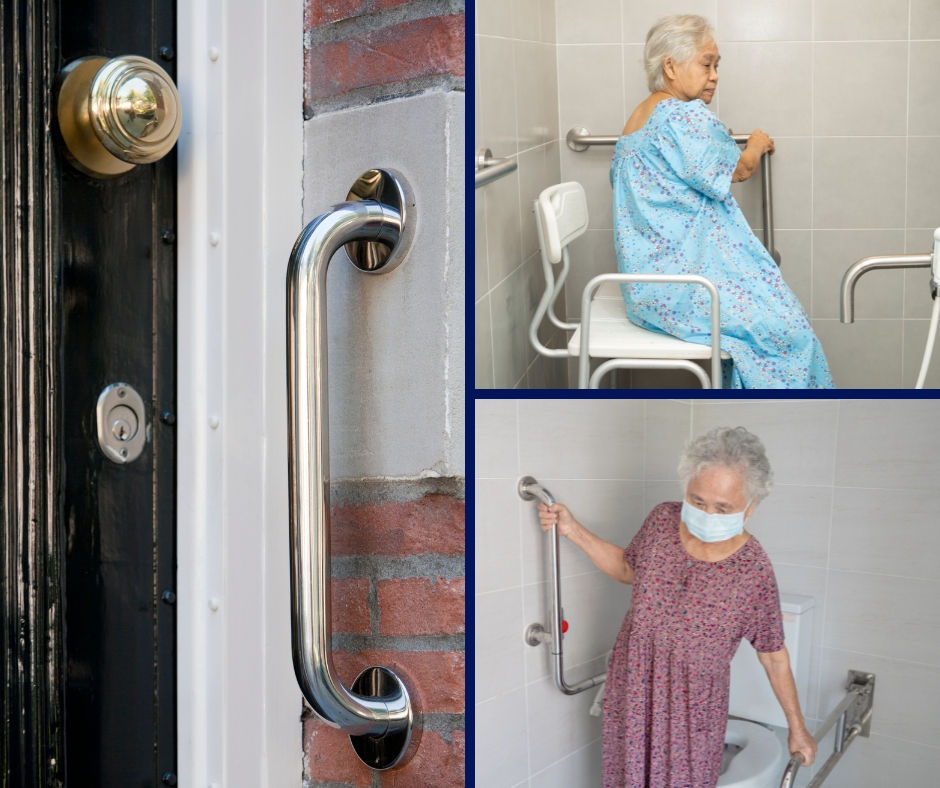
1. Install Secure Grab Bars Near the Door
One of the most effective safety additions to an entryway is a properly installed grab bar.
While many people associate grab bars with bathrooms, they’re incredibly helpful near doorways — especially where there are steps or uneven thresholds.
A grab bar provides:
Immediate support when stepping up or down
Stability when unlocking the door
Balance assistance when carrying items
Confidence for individuals with limited mobility
It’s important that grab bars are professionally installed into studs or reinforced backing to ensure they can support full body weight.
When placed thoughtfully, they blend seamlessly into modern home design while offering serious safety benefits.
2. Improve Lighting — Inside and Out
Good lighting can prevent countless accidents.
Consider these upgrades:
Motion-sensor lights outside the front door
LED step lighting
Brighter overhead fixtures
Light switches placed at reachable heights
Smart bulbs that can be controlled remotely
Soft shadows can make steps appear flat. Brighter, even lighting eliminates guesswork and makes depth changes easier to detect.
For seniors especially, increased lighting reduces hesitation and improves confidence during transitions.
3. Add Non-Slip Surfaces
Slippery floors are one of the biggest contributors to entryway accidents.
You can reduce risk by:
Installing non-slip adhesive strips on steps
Choosing textured flooring materials
Using heavy, rubber-backed entry mats
Avoiding loose throw rugs
The key is stability. If a mat slides when stepped on, it becomes part of the problem instead of the solution.
Outside, consider non-slip coatings on concrete or stone surfaces — especially in areas that get wet from rain or sprinklers.
4. Widen the Pathway
Entryways should allow comfortable movement without squeezing through tight spaces.
If your doorway or hallway feels narrow, small adjustments can help:
Remove bulky furniture near the door
Relocate shoe racks
Use slim storage benches
Ensure clear pathways at least 32–36 inches wide
For wheelchair users or those using walkers, adequate clearance is essential.
Sometimes improving safety isn’t about adding something — it’s about removing obstacles.
5. Smooth Out Thresholds
Raised door thresholds may seem minor, but even half an inch can cause a stumble.
Low-profile or beveled thresholds make a huge difference for:
Wheelchairs
Rollators
Canes
People shuffling their feet
If you notice someone catching their toe or wheel at the entrance, that’s a sign the threshold needs attention.
6. Install Handrails for Exterior Steps
If your home has steps leading to the front door, sturdy handrails on at least one side are essential — ideally both sides.
Handrails provide:
Support during ascent and descent
Added stability in wet weather
Confidence when balance is compromised
Many modern railing designs look sleek and architectural, proving that safety upgrades don’t have to sacrifice curb appeal.
7. Create a Seating Area for Shoe Changes
A simple bench near the entryway can significantly reduce fall risk.
Why? Because sitting down to remove or put on shoes eliminates the need to balance on one leg — one of the most common causes of falls.
Choose a bench that:
Is stable and doesn’t wobble
Has arms or support if possible
Is placed on a non-slip surface
This small addition improves comfort and safety at the same time.
8. Declutter and Organize
Clutter is an invisible hazard.
Keep entryways clear by:
Installing wall hooks for bags and jackets
Using closed storage cabinets
Keeping shoes in a contained rack
Regularly removing unused items
The more open and simple the space, the safer it becomes.
Entryway Safety for Aging in Place

If your goal is to age in place — or help a loved one remain in their home longer — entryway modifications are one of the smartest investments you can make.
They:
Reduce fall risk immediately
Improve daily independence
Minimize reliance on assistance
Create smoother transitions between indoor and outdoor spaces
Unlike major remodeling projects, these upgrades are relatively affordable and can often be completed quickly.
And because the entryway is used multiple times per day, improvements have an immediate impact.
Safety That Doesn’t Feel Clinical

One concern homeowners often have is that safety modifications will make their home look institutional.
The truth? Modern safety solutions are designed to blend into contemporary homes.
Grab bars come in:
Brushed nickel
Matte black
Stainless steel
Designer finishes
Handrails can match exterior aesthetics. Lighting upgrades can enhance ambiance. Non-slip surfaces can be subtle.
Safety today doesn’t mean sacrificing style.
When to Call a Professional
Some modifications are simple DIY projects. Others require professional installation to ensure safety and durability.
For example:
Grab bars must be secured into studs
Handrails must meet proper height and support standards
Structural adjustments to thresholds require expertise
Improper installation can create a false sense of security — which can be dangerous.
If you’re serious about preventing accidents, professional guidance ensures everything is done right the first time.
Peace of Mind Starts at the Front Door
There’s something powerful about walking into your home feeling stable, confident, and secure.
Safer entryways aren’t just about preventing accidents — they’re about preserving independence, dignity, and comfort.
Every small modification adds up:
Better lighting
Stable handholds
Smooth transitions
Non-slip surfaces
Clear pathways
Together, these upgrades create a safer daily routine for everyone who enters your home.
Make Entryway Safety Simple
If you're ready to improve your home’s safety without committing to a major remodel, professional support can make the process easy and stress-free.
GrabBar Los Angeles specializes in high-quality grab bar installation and safety modifications designed to improve mobility and reduce fall risk — not just in bathrooms, but throughout the home, including entryways.
Their team understands how to:
Install secure, ADA-compliant grab bars
Reinforce support areas properly
Recommend practical safety solutions
Enhance safety without disrupting your home
Whether you’re planning for aging in place or simply want to create a safer environment for your family, the right support makes all the difference.
Visit 👉 https://www.grabbarlosangeles.com/ to explore safe, reliable installation services that help protect what matters most — your independence and your home.


Comments