
Best Shower Grab Bars for Seniors: What to Look for Before You Buy

Walk down the bathroom safety aisle and every grab bar looks more or less the same: a metal tube, some mounting flanges, a few inches of length. But a shower grab bar for seniors isn't a one-size-fits-all purchase. The right bar depends on grip strength, shower layout, wall material, and how the bar will actually be used — to steady a step over a threshold, to support a full-weight transfer onto a shower seat, or to catch a slip before it becomes a fall.
Buying the wrong one is an easy mistake to make, and it's rarely obvious until someone's already relying on it. This guide walks through exactly what to check before you buy — material, diameter, length, mounting, and placement — so the bar in the shower is one that actually holds up when it's needed.
Why Grab Bar Selection Matters More for Seniors
The CDC identifies falls as the leading cause of injury among adults 65 and older, and bathrooms — wet, slippery, full of hard surfaces — are one of the highest-risk rooms in the house. A grab bar is one of the simplest, most effective interventions available, but only if it's the right bar in the right place.
For seniors specifically, grip strength, balance, and reaction time all factor into what "right" looks like. A bar that's too thick to close a hand around fully, mounted too high to reach during a fall, or anchored into drywall instead of a stud isn't offering real protection — it's offering the appearance of it. That distinction is worth taking seriously before you buy.
What to Look for Before You Buy
1. Material and Finish
Stainless steel is the standard for shower grab bars for seniors, and for good reason: it resists corrosion from constant moisture exposure, holds up over years of daily use, and is widely available in both polished and textured finishes. A textured or knurled surface matters more than it might seem — wet, soapy hands need a grip surface that won't slip, and a smooth chrome finish can become dangerously slick exactly when it's being relied on most.
Avoid finishes designed primarily to look decorative rather than function as a safety grip. If a bar's main selling point is its appearance, check the load rating and grip texture carefully before assuming it performs the same as a purpose-built accessible bathroom grab bar.
2. Diameter
A bar's diameter determines whether a hand can fully wrap around it — which matters enormously for anyone with arthritis, reduced grip strength, or smaller hands. ADA-compliant shower grab bars specify a diameter between 1.25 and 1.5 inches, which is generally considered the range that balances a secure full-hand grip with enough surface area to bear weight comfortably. Bars outside this range, either too thin or too thick, are harder to grip firmly in the exact moment a secure hold matters most.
3. Length and Placement
Length isn't just about covering wall space — it's about covering the full range of motion someone needs during a shower, from stepping over the threshold to standing back up from a seated position. A single short bar might support one movement but leave another unsupported. Many bathrooms benefit from a combination: a vertical bar near the entry for the step-in, plus a horizontal bar along the back or side wall for stability while washing or transferring onto a shower seat.
Where that combination lands also depends on shower compartment type — a shower security consideration that's easy to overlook: a small transfer-type shower needs a different bar configuration than a larger roll-in shower designed for wheelchair access.
4. Load Capacity
A grab bar's advertised weight rating needs to reflect real-world use, not just the bar's own manufacturing spec sheet in isolation. ADA-compliant bars are built to support a minimum of 250 pounds of force — not the static weight of a person standing, but the dynamic force of someone catching themselves mid-fall or pulling their full body weight through a transfer. A bar rated below this threshold, or one without a clear load rating at all, shouldn't be trusted as a primary safety fixture in a senior's shower.
5. Mounting Compatibility With Your Wall Type
This is where a lot of well-chosen bars fail at the install stage. A bar rated for 250 pounds is only as strong as what it's anchored into. Tile, fiberglass surrounds, and cultured marble each require different anchoring approaches, and in every case, the bar needs to reach solid wall blocking or a stud behind the surface — not just a decorative anchor sunk into tile or drywall. If you're not confident the wall behind your shower has blocking in the right spot, that's a question worth answering before you buy a bar, not after it's already on the wall.
Not sure which bar fits your bathroom? The best grab bar for a senior depends on their grip strength, your shower layout, and your wall type — not a generic size. Our team can walk through options and install the right bar correctly the first time. Contact us to talk through what your bathroom needs.
Straight, Angled, or Combination Bars — Which One?
Shower grab bars generally come in three shapes, and each supports a different kind of movement:
Straight bars are the most common and versatile, typically mounted horizontally or vertically depending on where support is needed.
Angled bars combine a horizontal and vertical section in one fixture, useful for supporting both a standing-to-seated transition and a step-over motion in one spot.
Combination or multi-bar setups use two or more bars working together — common in larger showers or for anyone who needs support through an entire sequence of movements, not just one point of contact.
For most seniors, a combination approach — rather than relying on a single bar to do everything — provides more consistent support throughout the full shower routine.
Suction Bars vs. Permanently Mounted Bars

It's worth addressing directly: suction-cup grab bars and best suction shower handle products marketed as a tool-free alternative are not a substitute for a permanently mounted bar. Suction mounts rely on surface tension and can fail without warning, particularly as suction weakens over time or if the wall surface has any texture, soap residue, or moisture buildup. They may have a place as a temporary or supplemental aid, but they should never be the only support a senior relies on in the shower.
A permanently mounted, properly anchored bar — whether straight, angled, or part of a multi-bar layout — is the only option that reliably meets the 250-pound load standard that makes a grab bar trustworthy in a fall.
Common Buying Mistakes to Avoid
Choosing based on appearance alone, without checking diameter, grip texture, or load rating
Assuming any grab bar is ADA-compliant without confirming diameter, clearance, and load specs
Buying a single bar when the shower layout and the user's needs call for two or more working together
Relying on suction-mount bars as a primary safety fixture rather than a temporary aid
Not checking wall type before purchase, leading to a bar that can't be properly anchored once it's home
DIY Installation vs. Professional Installation
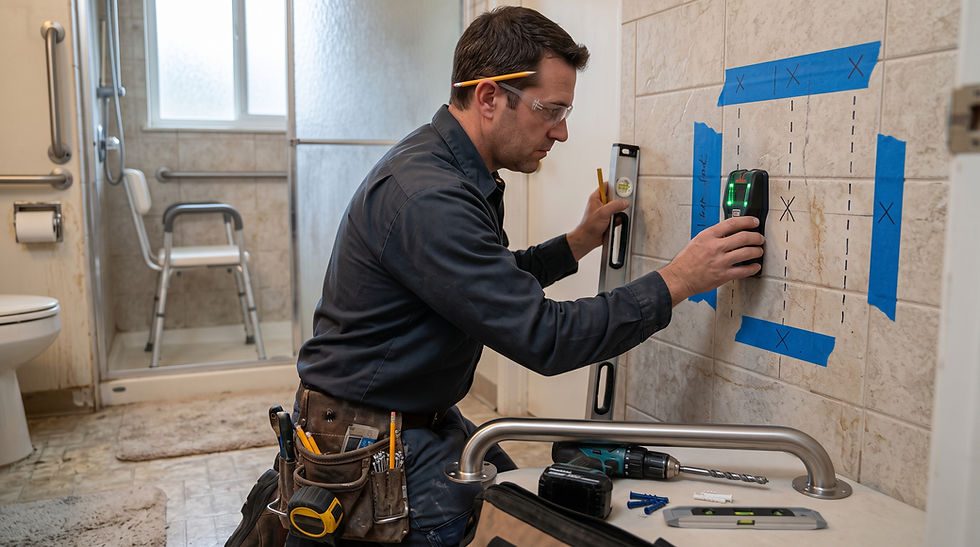
Once you've chosen the right bar, installation is where the safety margin either holds or doesn't. A correctly specified bar mounted into drywall instead of blocking still fails under real weight — the bar itself was never the weak point. Homeowners comfortable confirming stud locations and working with their specific wall material can often install a bar correctly themselves. For tile, fiberglass, or older bathrooms where blocking wasn't planned around grab bar placement, professional installation ensures the anchor actually reaches solid framing rather than relying on the wall surface alone.
Ready to have it installed the right way? Our professional installers handle every wall type across the LA area and mount every bar to full ADA load standards. See our grab bar installation service to get started.
Related Reading
For a full breakdown of ADA placement and spacing requirements by shower compartment type, see our ADA-compliant shower grab bars requirements and buying guide. And for a closer look at how the right grab bars support long-term independence at home, read shower grab bars, safety, and independence.
Frequently Asked Questions
1. What's the best material for a senior's shower grab bar?
Stainless steel is the standard choice, offering corrosion resistance and durability under constant moisture exposure. A textured or knurled finish adds grip security that smooth, decorative finishes often lack.
2. What diameter grab bar is easiest for seniors to grip?
A diameter between 1.25 and 1.5 inches is generally considered the most secure range, allowing a full hand grip without the bar being too thick to close a hand around comfortably.
3. How much weight should a shower grab bar hold?
Look for a minimum 250-pound load rating, which reflects the dynamic force of catching a fall or completing a full-weight transfer, not just supporting someone standing still.
4. Are suction-cup grab bars safe for seniors?
Suction-mounted bars aren't rated for the same load standards as permanently anchored bars and can fail unexpectedly as suction weakens. They're best used as a temporary or supplemental aid, not a primary safety fixture.
5. How many grab bars does a shower need?
It depends on the shower layout and the user's needs, but many bathrooms benefit from at least two bars working together — one for stepping over the threshold, and one for stability while standing or transferring.
6. Can a grab bar be installed on any shower wall?
Not without checking first. The bar needs to anchor into solid wall blocking or a stud behind the surface, and tile, fiberglass, and cultured marble each require a different mounting approach to avoid cracking the surface or failing to reach solid framing.
7. Should I install the grab bar myself or hire a professional?
If you're confident locating blocking and working with your specific wall material, a DIY install can work. For tile, fiberglass surrounds, or older bathrooms without planned blocking, professional installation reduces the risk of a bar that looks secure but isn't properly anchored.


Comments